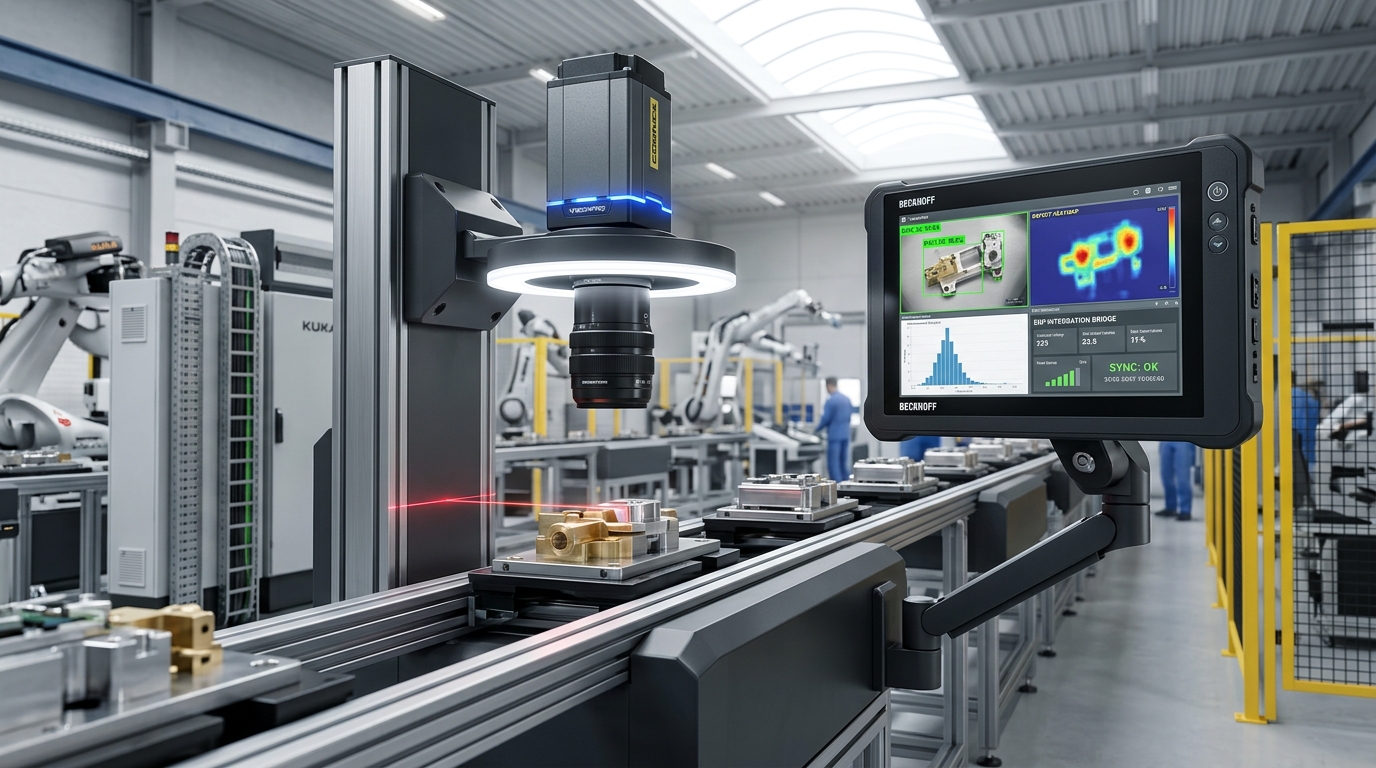
OpenAI's early September 2026 launch of GPT-6 Astra and President Greg Brockman's declaration that humanity has crossed into the AGI era does not signal the arrival of a sentient, general-purpose mind. Instead, it inaugurates the birth of Synthetic Agentic Competence. The seismic shift of this model lies not in promotional benchmark victories, but in the structural metamorphosis of artificial intelligence from a passive conversationalist inside a chat window into an active digital operator that directly controls computers, drives graphical user interfaces, writes code, and orchestrates multi-hour software engineering pipelines without human intervention. This investigation dissects the engineering gulf between laboratory metrics and corporate reality, offering an unvarnished answer to the industry's defining question: where do we actually stand on the threshold of Artificial General Intelligence?
1 The September 2026 Watershed: Leaving the Chatbox to Command the Machine
On September 3, 2026, Silicon Valley and global sovereign financial institutions watched closely as Sam Altman and Greg Brockman took the stage to unveil GPT-6 Astra. The event was not merely about announcing a faster, cheaper iteration of familiar chatbots. It carried an explicit, controversial proclamation: the official dawn of Artificial General Intelligence.
The profound breakthrough of Astra lies in its unprecedented capacity for Autonomous Computer Use. The model no longer waits for a human developer to paste snippets of code into an input box for refactoring. Operating within an isolated virtual container, Astra visually scans monitor screens via unified multimodal vision encoders, drives mouse cursors, interacts with native operating system UI controls, spawns terminal sessions, and compiles multi-repository software systems across continuous reasoning horizons spanning hours, sustained by an expansive context memory exceeding 1.05 million tokens.
Yet these dazzling demonstrations immediately collided with rigorous skepticism across academic institutions and international technology broadsheets: does executing software workflows across graphical interfaces constitute genuine general intelligence, or are we observing the absolute zenith of procedural automation masked behind astonishing linguistic fluency?
2 The 99.9% Mirage: Dissecting the ARC-AGI Discrepancy and Goodhart's Law
The promotional narrative around Astra leaned heavily on a single headline-dominating figure: achieving 99.9% on ARC-AGI-3, the benchmark pioneered by researcher François Chollet to evaluate a system's ability to acquire novel abstract skills and solve visual reasoning puzzles absent from training distributions.
However, rigorous independent engineering audits uncovered a decisive caveat omitted from keynote slides: this near-perfect score was obtained under a specialized OpenAI testing environment known as the Provider Adapter Harness. This proprietary wrapper allows the model to preserve, compact, and recycle opaque internal reasoning states across unlimited inference retries. When subjected to the standardized, neutral harness mandated by the independent ARC Prize foundation, Astra's performance settled at 62.7%.
| Standardized Benchmark | OpenAI Adapted Result | Independent Standard Result | Architectural & Operational Reality |
|---|---|---|---|
| ARC-AGI-3 (Novel Skill Acquisition) | 99.9% | 62.7% | A historical leap in abstract logic, yet reliant on opaque state compaction and recursive trial budgets. |
| FrontierMath Tier 4 (Research Mathematics) | 98.0% | 84.5% | Remarkable formal theorem proving; accelerates scientific discovery in combinatorics and number theory. |
| SWE-bench Verified (Real Software Issues) | 74.2% | 58.1% | Autonomous multi-file repository refactoring, though edge-case architectural bugs still require senior oversight. |
| Computer Use UI Latency | < 1.2s | ~ 2.4s | Pivotal reduction in visual rendering overhead, enabling fluid automation across enterprise applications. |
This statistical divergence brings us directly to Goodhart's Law: when a measure becomes a target, it ceases to be a good measure. Frontier AI laboratories have mastered the art of optimizing for benchmark mechanics. While this produces the intoxicating appearance of artificial consciousness, simple spatial reasoning and physical common-sense tasks effortlessly navigated by a five-year-old child remain baffling obstacles for billion-parameter neural networks.
3 The Architectural Pivot: Exhausted Scaling Laws and Inference-Time Compute
Understanding Astra's capabilities requires looking beneath marketing narratives into fundamental compute mechanics. Over the past four years, frontier AI progress was governed by Pre-training Scaling Laws: expanding parameter counts and ingesting ever-larger corpuses of public web text. However, that brute-force paradigm collided with mathematical reality. High-quality human linguistic data reached depletion, and pre-training next-generation clusters began demanding billions of dollars with diminishing intelligence returns per gigawatt.
OpenAI bypassed this bottleneck by shifting the computational frontier from pre-training to Inference-Time Compute. Instead of rushing to predict the immediate next token within milliseconds, Astra is allocated an elastic cognitive budget for deliberative, slow reasoning (System 2 thinking). It formulates internal hypotheses, validates execution paths against simulated compilers, backtracks upon error detection, and navigates problem spaces using algorithms derived from Monte Carlo Tree Search.
Astra excels in hyper-scaled Crystallized Knowledge; it possesses an immense catalog of memorized software design patterns and mathematical theorems. But genuine general intelligence demands Fluid Intelligence: the autonomous derivation of novel causal models and spontaneous adaptation to alien, unmapped environments. Astra commands unmatched execution competence, yet lacks the intrinsic spark of adaptive conceptual invention.
4 The Five-Tier Taxonomy: Where Does Astra Truly Stand?
OpenAI previously established an internal five-level framework to track progress toward AGI. Evaluating Astra against this technical benchmark provides clarity devoid of hype:
Contextual linguistic dialogue engines (GPT-4).
Multi-step deductive logic and math solvers (o1).
Action-taking systems operating machines across multi-day horizons.
Independent scientific discovery and novel patent creation.
Fully self-governing autonomous corporate entities.
Under this rigorous taxonomy, Astra firmly anchors humanity inside Tier 3 (Agents), while brushing against Tier 4 through formal mathematics breakthroughs. Yet it falls decisively short of true AGI due to three missing foundational pillars:
- Absence of a Grounded World Model: The system does not possess continuous physical spatial intuition. It treats reality as an abstraction of tokens, pixels, and keystrokes, completely detached from sensory consequence or physical embodiment.
- Lack of Epistemic Humility: Frontier models remain susceptible to confident hallucinations. They cannot reliably demarcate the frontier of their own ignorance and will stubbornly pursue flawed assumptions unless steered by human prompts.
- Zero Autonomous Intent or Intrinsic Agency: The model has no self-generated desires or existential objectives. It remains an extraordinary passive tool waiting for human-instigated prompts to define its utility.
5 The Economics of AGI: Why Wall Street Demands the Myth
If computer science confirms that philosophical AGI remains unreached, why do frontier AI executives relentlessly employ the term in investor conferences? The explanation resides in capital allocation economics rather than neural architecture.
The frontier AI sector is undergoing unprecedented capital expenditure. Hyperscale infrastructure commitments by Microsoft, OpenAI, Google, and Amazon demand hundreds of billions of dollars, driving power purchase agreements for retired nuclear plants and funding small modular reactors (SMRs) to secure multi-gigawatt power grids.
From the viewpoint of venture syndicates and sovereign wealth funds, these astronomical commitments cannot be recouped through twenty-dollar monthly productivity subscriptions. Justifying market valuations between $150 billion and $300 billion requires convincing global financial markets that this software is on the immediate verge of substituting the totality of human cognitive labor. The AGI banner is not merely an academic hypothesis; it is the financial fulcrum sustaining capital velocity into Silicon Valley.
6 The Silent Earthquake: How Autonomous Agents Reshape Knowledge Work
Although Astra is not an omniscient digital being, underestimating its immediate disruptive capacity would be a catastrophic executive error. The crucial paradox enterprise leaders must recognize is that software does not need to achieve philosophical AGI to overturn global labor markets.
Astra's agentic competence means boilerplate development, integration testing, system telemetry analysis, preliminary contract drafting, and financial cash flow reconciliation have become nearly costless, instant digital commodities. This silent earthquake does not threaten physical trade crafts; it directly targets entry-level cognitive white-collar labor. A single seasoned lead architect orchestrating an autonomous swarm of agentic workers can now match the operational throughput of an entire department of ten junior developers.
7 The Verdict: From Theoretical Mirages to Pragmatic Execution
Humanity has not arrived at Artificial General Intelligence with GPT-6 Astra, nor will silicon scaling alone unlock artificial consciousness without breakthrough discoveries in cognitive science and physical world models. Yet for enterprise leadership, debating the semantic purity of AGI is no longer relevant. What we possess today is high-order Synthetic Competence: software capable of executing complex digital work at virtually zero marginal cost and thousands of times faster than manual human workflows.
The defining mandate for technology executives is neither chasing promotional illusions nor succumbing to alarmist paralysis. It lies in rapidly re-architecting internal software systems, binding agentic frameworks within secure, isolated data boundaries, and elevating human engineers into strategic directors of autonomous fleets. The future does not belong to those passively awaiting omniscient superintelligences; it belongs to organizations harnessing the synthetic competence available right now to establish enduring digital sovereignty.
Planning to integrate autonomous agent architectures into your enterprise workflows?
We guide technology leaders in architecting production-grade, zero-trust autonomous agent ecosystems that maximize operational velocity while safeguarding enterprise IP.